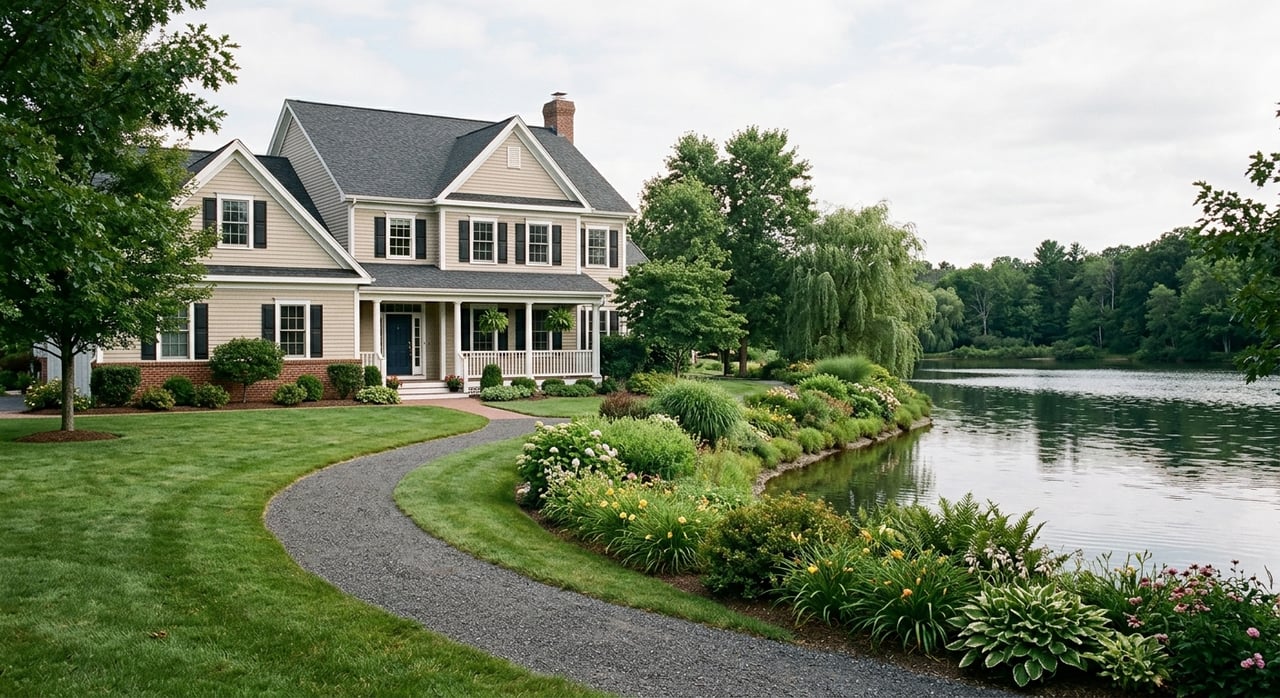
If a Reston lake home has been on your wish list, it helps to know that you are not just buying a view. You are also buying into a specific set of access rules, design standards, and community costs that can shape your day-to-day experience. The good news is that once you understand how Reston’s lake communities work, you can shop with more confidence and fewer surprises. Let’s dive in.
Reston’s lakes are more than scenery
Reston’s four man-made lakes are Lake Anne, Lake Thoreau, Lake Audubon, and Lake Newport. Together, they cover 125 acres and support activities such as fishing, boating, wildlife watching, and lakeside picnicking.
They also serve a practical purpose. Reston Association describes the lakes as part of the community’s stormwater management system, which means they are functional infrastructure as well as recreational assets.
If size matters to you, Lake Audubon is the largest at 43.5 acres, followed by Lake Thoreau at 40 acres, Lake Anne at 24.8 acres, and Lake Newport at 12.3 acres. That can affect both the feel of the setting and the type of lake access you may want to prioritize.
Reston Association shapes the ownership experience
A big first step is understanding Reston Association, often called RA. RA says it serves more than 60,000 people and administers covenants, assessments, and common-area amenities for more than 22,000 residential units.
That matters because buying near one of the lakes is rarely just about the house itself. You are also buying into a larger planned community with rules, shared amenities, and ongoing assessments.
The annual RA assessment supports a broad amenity network that includes 15 outdoor pools, 55 miles of pathways, and maintenance of open space, bridges, and underpasses. Even if your home is not directly on the water, you are still part of a community with a substantial shared recreation system.
Expect more than one association layer
One of the most important things to know before you buy is that Reston often has layered association structures. RA says there are more than 160 sub-associations, including cluster and condominium associations that work regularly with RA staff.
In practical terms, a lake-area home may come with more than one set of rules and more than one recurring fee. Depending on the property, you may have RA oversight plus a cluster or condo association with its own budget, documents, and standards.
This is why your total monthly and annual housing cost should include more than your mortgage payment. You may also need to factor in the RA assessment, any cluster or condo dues, and the transfer fee due at settlement.
Know the current RA costs
For 2026, RA lists its annual assessment at $890, due January 1, 2026. RA also states that the transfer fee at settlement is $374.
Those figures may not be the biggest line items in your housing budget, but they should not be treated as afterthoughts. They are part of the cost of ownership in Reston and should be reviewed early when you compare properties.
If you are choosing between a detached lakefront home, a townhome near a lake path, or a condo in a nearby village center, these layers can affect affordability in different ways. A clear side-by-side cost comparison can help you avoid stretching for a lifestyle that feels better on paper than it does in real life.
Resale documents matter in Reston
Virginia law requires the seller to obtain the RA resale disclosure certificate and provide it to the buyer. If the home is also part of a cluster or condominium association, you will need disclosure documents from that sub-association too.
According to RA, these packets can include assessment information, a community map, and information about design or maintenance violations observed during exterior inspections. This is one of the most important due diligence steps in a Reston purchase.
Before you move forward, take time to review these documents carefully. They can help you understand not only what you will pay, but also what obligations or property issues may need attention after closing.
Lake access is not the same everywhere
A common mistake buyers make is assuming all lake-area homes offer the same kind of water access. In Reston, RA’s rules distinguish between lakefront property, direct access, general access, and deeded dock-related access.
That means two homes with similar lake proximity can deliver very different experiences. One property may allow direct entry to the lake from the lot, while another may rely on designated access points shared by RA members.
RA states that general access is limited to permit holders and their guests during prescribed daily hours. RA also notes that access points can be closed at its discretion, so it is smart to confirm how a specific property fits into the access framework before you buy.
Understand what lake living does and does not include
Reston’s lake lifestyle appeals to many buyers for good reason. You can enjoy boating, fishing, walking, and scenic views, and the lakes connect to a broader network of pathways and community amenities.
At the same time, there are clear limits. RA states that swimming is prohibited in Reston’s lakes and ponds, and winter activities such as ice skating, ice fishing, and walking on frozen lakes are also prohibited.
RA also says the lakes are not maintained or monitored for swimming and do not have lifeguards. So if your ideal lifestyle includes a swim-beach environment, Reston’s lakes may not match that expectation.
Docks come with rules and responsibilities
If you are drawn to a property with a dock, or you hope to add one later, pay close attention to the approval process. RA states that docks must be approved and maintained according to Design Review Board guidelines and require a license agreement.
This is not a casual improvement. RA also retains the right to require correction or remove unsafe or poorly maintained docks and other improvements if problems are not fixed after notice.
For buyers, that means a dock can add enjoyment, but it can also add responsibility. During due diligence, it is worth asking whether the dock is approved, what condition it is in, and whether any repair or compliance issues are pending.
Shoreline condition can affect future costs
The shoreline itself deserves a close look. RA says shoreline stabilization projects are reviewed by the Design Review Board, and it notes that living shorelines can be a lower-cost, lower-maintenance alternative to bulkheads or riprap.
This may not be the first thing you notice when touring a home, but it can matter a lot over time. Shoreline condition affects both the appearance of the property edge and the likelihood of future maintenance expenses.
A beautiful rear yard that slopes toward the water may still need work if the shoreline is unstable or if an older improvement is nearing the end of its useful life. Buyers who understand that early are often better prepared for the true cost of ownership.
Exterior changes are closely reviewed
Reston’s Design Review Board, or DRB, is an independent agency responsible for reviewing exterior alterations and improvements. RA says its Design Guidelines apply to property improvements, landscaping, and new construction.
That means your future plans should be part of your home search conversation. If you are hoping to expand a deck, change landscaping, rebuild a dock, or make visible exterior updates, you will want to understand the approval environment before committing to the property.
This does not make buying in a lake community a bad idea. It simply means that ownership works best when you value consistency, planning, and a clear process for exterior changes.
Water quality is part of the value story
Lake living often carries a price premium, and broader housing research suggests that water quality can influence home values, especially for homes closest to the shoreline. In Reston, that matters because the lakes are actively managed and monitored.
RA says it monitors lake water quality, manages invasive species, and undertakes projects such as hydrilla management and dredging. In other words, the lakes are not static amenities. They require ongoing stewardship.
For buyers, this is useful context. The water itself is part of the appeal, but it is also part of the long-term maintenance story that supports the community’s overall experience and value.
What usually changes pricing most
Not every Reston lake property is priced the same way, and not every buyer will value the same features. In many cases, the biggest variables are direct frontage, proximity to general access, the presence of a dock or shoreline structure, and the amount of association oversight involved.
Your own lifestyle fit matters just as much. If you want an immersive waterfront experience, direct frontage may be worth the premium. If you mainly want trails, views, and occasional water access, a nearby off-lake property may offer a better balance of cost and convenience.
This is where a focused comparison becomes valuable. Looking at photos is easy. Understanding the difference between view value, access value, and maintenance burden is where smart buying decisions happen.
Questions to ask before you buy
Before you make an offer in one of Reston’s lake communities, it helps to get clear answers to a few practical questions:
- Is the property subject to only RA, or also to a cluster or condo association?
- What are the current RA fees and any additional association dues?
- Does the home have direct lake access, general access, or any deeded dock-related rights?
- Is there a dock, and if so, is it approved and in good condition?
- Are there any exterior design or maintenance violations in the resale documents?
- Does the shoreline show signs of deferred maintenance or stabilization needs?
- If you want to make exterior changes, what approvals may be required?
These questions can help you compare homes on substance, not just curb appeal. They also reduce the chance of discovering key restrictions after you are already emotionally invested.
A smart way to shop Reston’s lakes
Buying in Reston’s lake communities can be a great fit if you want scenic surroundings, boating and fishing access, strong community amenities, and a structured ownership environment. The key is to understand that the lifestyle comes with rules, documents, and costs that deserve a close look before you commit.
When you evaluate these homes with a full-picture mindset, you can better match the property to your goals, budget, and tolerance for maintenance. That is especially helpful if you are relocating, moving up, or trying to compare waterfront appeal against everyday practicality.
If you want help comparing lakefront and near-lake options in Reston, Gwak Homes can guide you through the details, from resale documents and association layers to the practical tradeoffs that matter before you buy.
FAQs
What should you know first about buying in Reston’s lake communities?
- You should know that a lake-area home may involve RA plus a cluster or condo association, which can affect fees, rules, access, and required disclosure documents.
What lakes are in Reston, Virginia?
- Reston has four man-made lakes: Lake Anne, Lake Thoreau, Lake Audubon, and Lake Newport.
Can you swim in Reston’s lakes?
- No. RA states that swimming is prohibited in Reston’s lakes and ponds, and the lakes are not maintained or monitored for swimming.
Do all Reston lake homes have direct water access?
- No. RA distinguishes between lakefront property, direct access, general access, and deeded dock-related access, so access can vary significantly by property.
What are the Reston Association fees for 2026?
- RA lists a 2026 annual assessment of $890 and a transfer fee at settlement of $374.
What documents do buyers need for a Reston lake home?
- Buyers need the RA resale disclosure certificate, and if the home is in a cluster or condominium association, they also need disclosure documents from that sub-association.
Are docks allowed on Reston lakes?
- Docks may be allowed, but RA states they must be approved, maintained under DRB guidelines, and covered by a license agreement.
Why does shoreline condition matter when buying a Reston lake home?
- Shoreline condition can affect long-term maintenance, future project costs, and the overall usability and appearance of the property edge.