For as long as most residents can remember, Saturday morning in Middleburg started in a parking lot. Vendors set up behind Town Hall on West Marshall Street, coolers of local lamb and beef next to folding tables of zinnias and asparagus, and by 9 a.m. the town smelled like fresh bread and cut grass. That ran every May through October, rain or shine, for decades.
It is not running this year. After what the town describes as extended debate over how to structure it going forward, Middleburg's government made the call not to hold a Farmers Market in 2026. No interim vendor pop-up replaced it. No neighboring town absorbed the overflow. The parking lot behind Town Hall is just a parking lot again on Saturday mornings.
What's interesting is not that the market disappeared. Small-town markets run on volunteer labor and thin margins, and plenty of them fold. What's interesting is what didn't disappear with it, and why. Middleburg's fall calendar this year is arguably fuller than it's been in recent memory: a sixth annual Oktoberfest, a five-day horse show benefiting a regional land trust, a century-old steeplechase tradition, a film festival now well into its second decade, a brand-new wellness studio, and a 30-year-old gallery marking its anniversary with a globally exhibited painter. None of that needed the market to survive. None of it is even organized the same way the market was.
Two Different Economies, One Town
The market and the fall calendar were never really the same kind of thing, and that's the part worth understanding if you live here and are wondering what fills the gap.
| Middleburg Farmers Market | The fall calendar (Oktoberfest, Horse Show, Fall Races, Film Festival) | |
|---|---|---|
| Organizer | Town of Middleburg, staffed by a market manager | Middleburg Arts & Community Events Committee, Piedmont Environmental Council, private venues, nonprofit boards |
| Funding model | Vendor fees, town resources | Sponsorships, ticket and vendor revenue, philanthropic galas |
| Audience | Local residents buying groceries | Regional and out-of-town visitors |
| What it needed to run | Weekly volunteer coordination, a supply chain of local farms | A single weekend's logistics, contracted vendors, ticketed draw |
The market was a recurring municipal service dependent on someone showing up fifty-two Saturdays in a row to manage it. The events that make up Middleburg's fall calendar are mostly one-weekend productions run by outside organizations, nonprofits, or private businesses that have their own funding and their own reasons to keep showing up whether or not the town runs a produce stand. That structural difference is why one folded under public debate and the others didn't even come up in the conversation.
What's Actually on the Calendar
Here is what fills the weeks between Labor Day and Thanksgiving this year, in order:
- September 12 — Granted Wellbeing, a new Ayurvedic wellness studio at 15 S. Madison Street, holds its grand opening from 11 a.m. to 5 p.m. Founder Maggie Grant, a former White House staffer turned certified Ayurvedic health counselor, is opening the space with an infrared sauna and treatments built around what she calls four anchors: self-awareness, self-care, gratitude, and humor.
- September 16 to 20 — The Middleburg Classic Horse Show runs five days in neighboring Upperville, with a $20,000 Thoroughbred Hunter Derby and proceeds benefiting the Piedmont Environmental Council, the regional land trust that has shaped how much of this area's open space stays open.
- September 19 — Middleburg's sixth annual Oktoberfest takes over South Madison and Federal Streets from 11 a.m. to 6 p.m. Two biergartens, live music, a stein-holding competition, and a Corgi race field of 32 purebred competitors running heats at 1:30 and 3:00 behind the Tack Box. Last year's event drew roughly 4,500 visitors, a number the town cites when recruiting vendors and sponsors for this one.
- October 10 — The Virginia Fall Races return to Glenwood Park, the second-Saturday-in-October steeplechase tradition that predates almost everything else on this list.
- October 15 to 18 — The Middleburg Film Festival screens its lineup across town, drawing a crowd that has made this one of the region's more established cultural fixtures.
- November — The Byrne Gallery marks its 30th anniversary with an exhibition of oil and enamel paintings by Yuri Gorbachev, his 22nd consecutive show with the gallery, spanning a career that has run more than 50 years.
- November 26 — The season closes with the Turkey Trot 5K at the Middleburg Ballroom followed by the Grand Thanksgiving Buffet at Harrimans, the Salamander Middleburg restaurant that picked up a five-star win in Forbes Travel Guide's 2026 Star Awards.
That's seven distinct organizers across eleven weeks, none of them the same entity that ran the market, and none of them waiting on a town committee to greenlight next season.
Where the Saturday Morning Went
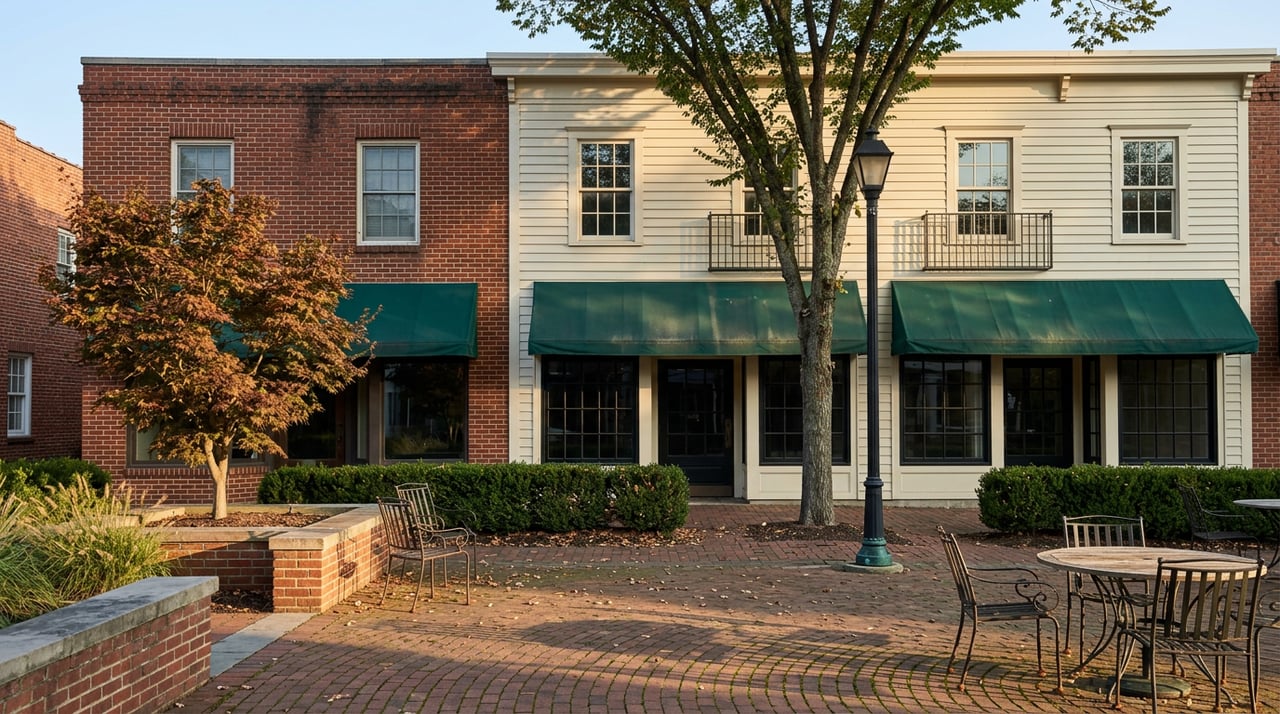
The market's absence does leave a real gap for the specific ritual of walking out with a bag of local produce before noon. What's absorbed that traffic isn't a single replacement but a scattering across businesses that were already there. The Middleburg Deli and Middleburg Common Grounds still open early. Knead Wine, known locally for a street-corn pizza called the Santana, still fills tables through the weekend. The Red Fox Inn & Tavern and Tremolo Bar carry the evening version of the same instinct that used to start in a parking lot: a reason to be downtown on a weekend without driving somewhere else.
None of these replaced the market's function, which was specifically about buying directly from the people who grew the food. What they replaced was the excuse to be in town. That distinction matters if you're trying to understand whether Middleburg's Saturday routine actually shrank this year or just changed shape. The honest answer is a bit of both. The grocery function is gone until someone revives it or a private vendor picks it up. The social function, the reason people used to say "let's just walk into town Saturday," has migrated to businesses that don't depend on a town-issued vendor permit to open their doors.
The Part Worth Remembering
The lesson here isn't really about a farmers market. It's about which parts of small-town life are load-bearing and which parts are decorative. Middleburg lost a piece of civic infrastructure this year, something that required a town employee, a rotating cast of vendors, and public money to sustain. What it didn't lose is the machinery that actually fills a calendar in a place like this: land trusts with fundraising arms, gallery owners with three-decade relationships to specific artists, hospitality groups with the budget to chase Forbes recognition, and a resort with an events team that programs a full quarter at a time.
If you live here, that's useful to know heading into next spring, when the question of whether the market comes back will probably resurface. It's also a decent way to read the town generally. Middleburg's identity was never really built on a produce stand. It was built on institutions with their own money and their own reasons to keep showing up, and this fall's calendar is the proof.
If you're weighing a move into Middleburg or watching how a town like this holds its character through changes like this one, Daniel Gwak has spent years tracking these blocks, from Federal Street storefronts to the farms just outside town. Gwak Homes offers a free home valuation and consultation for anyone curious what their piece of Hunt Country is actually worth right now.